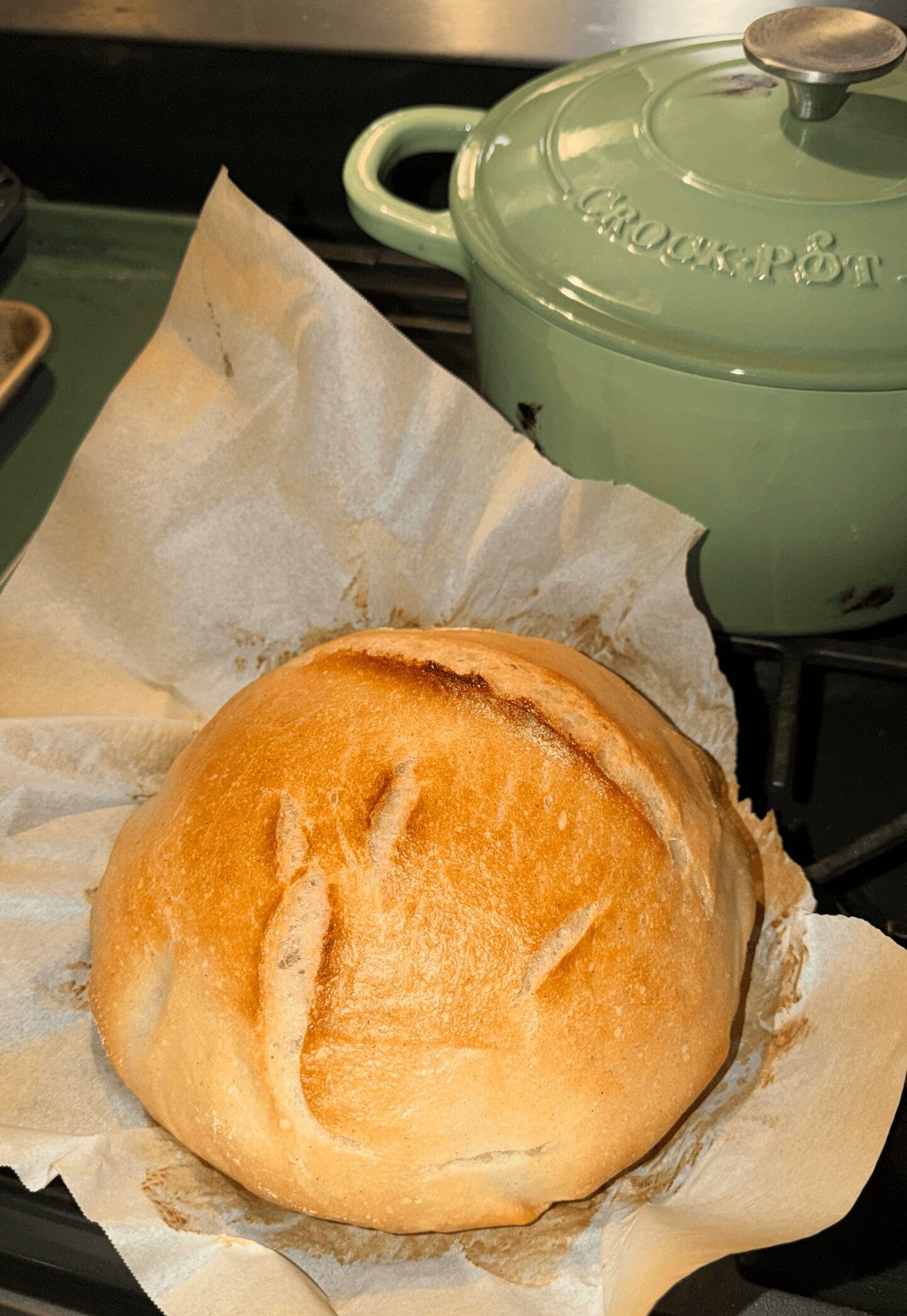
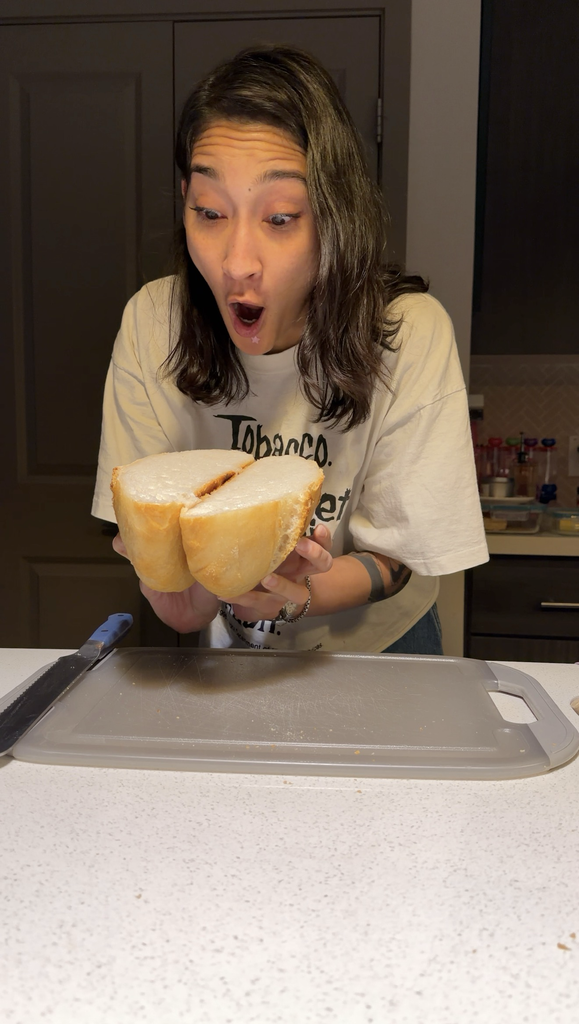
I am so excited to report that I made my first ever loaf of gluten-free sourdough bread – and she’s a beauty!
View on Threads
You can skip everything below if you want and go straight to the recipe I used from Caputo, but I gathered up all my ingredients, supplies, and tips to help you if you’re interested.
What You Need to Make Gluten-Free Sourdough Bread
You can get everything available on Amazon here from my list!
Ingredients
- Caputo Fioreglut gluten-free flour (celiac-safe, not safe for those with a wheat allergy)
- Active gluten-free sourdough starter (made with Caputo Fioreglut)
- Water
- Olive oil
- Salt
- Sugar
Kitchen Supplies
- Jars with lids – I got these, an alternative to the more expensive Weck 743. I like that they come with two different kinds of lids!
- Rubber band
- Food scale
- Plastic wrap
- Parchment paper
- Banneton and liner – I wanted the option of a round or an oval loaf. I love that they come with the little shower caps too, they’re quite nice.
- Dutch oven – I have [this one]. It was inexpensive and has served me well for years.
Helpful, but you probably already have something you can use for free at home:
- Bread lame – I straight up used a box cutter blade, but I want [this fancy one] one day.
- Silicone scraper – Use your biggest spatula if you don’t have one.
- Dough whisk – I used a fork this time. It was fine, but not great.
Please note that my methods are 90% doing things exactly according to the directions, 10% doing whatever the hell and things turning out okay anyway. That’s why I straight up do not own a bread lame or dough whisk yet and used a box cutter and fork, sue me.
Gluten-Free Sourdough Starter Tips
Caputo Fioreglut Flour
I need to preface this all with a note: Caputo Fioreglut is some of the most expensive gluten-free flour I have ever purchased, but it is deeply worth it.
Caputo Fioreglut is an Italian gluten-free flour blend made with specially processed gluten-free wheat starch, and it lends a very unique texture and flavor to gluten-free baked goods that a wheat-free flour simply doesn’t. This flour meets FDA gluten-free requirements and can be used by people with celiac disease who tolerate gluten-free wheat starch, but it is NOT safe if you have a wheat allergy.
I am looking into trying this recipe but with King Arthur Baking’s gluten-free bread flour. It’s similar to the Caputo flour in that it also contains gluten-free wheat starch, but it has a different ingredient blend, including pea protein. It’s also more affordable if the price tag of Caputo scares you a little bit!
Name Your Starter
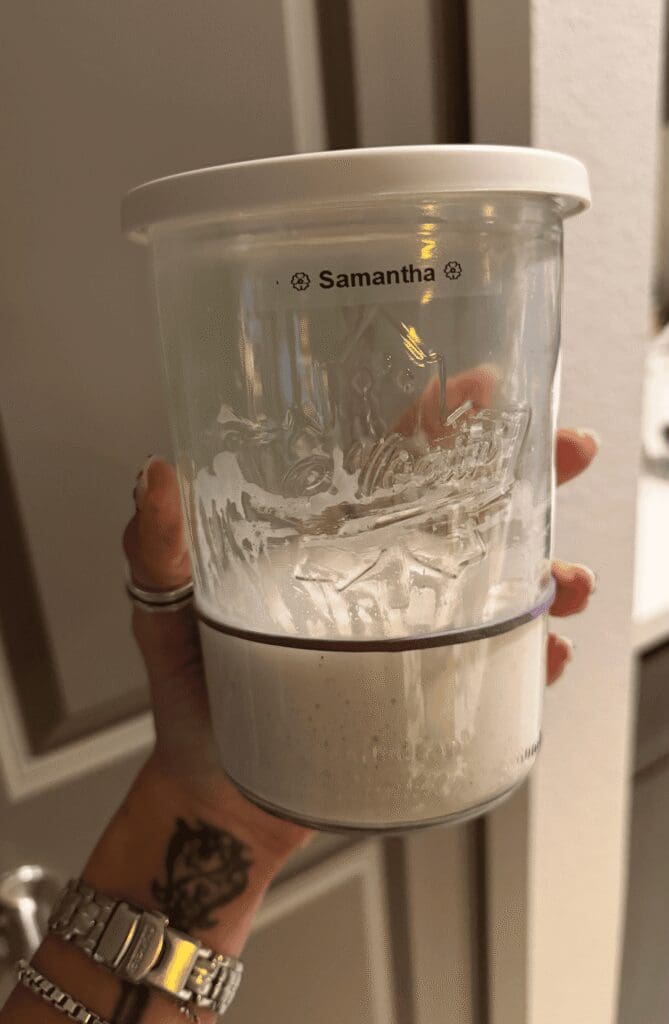
My dad lives in Colorado and has been in the sourdough game for years. The altitude gives him some trouble, but I think part of the problem was that he hadn’t named his starter until now!
Call me crunchy if you want, but I think you absolutely must name your starter. Something about knowing you have to nurture and take care of something that is literally alive means it needs a name in my book! I named my girl Samantha after the witch in Bewitched because I hoped she would be magic and she truly is.
Congratulations, You’re a Weatherperson Now.
Have you ever considered the atmospheric conditions of your home? Well, if you’re doing sourdough, you’re now also an amateur meteorologist.
Sourdough starter is hard to fully destroy, but she is a sensitive girl who gets cold easily. I forgot to feed her one time (she was hungry), moved my jar to the back countertop (in shadows), and we had an unexpected week of torrential downpours in Phoenix (temperatures dropped), and all of a sudden, at Day 9, Samantha stopped being active even though I kept feeding her.
I was concerned about a false start until I had the bright idea to keep her in the microwave. Turns out all she needed was a tiny room where she could stay warm! This is also where I kept the loaf whenever it needed to come to temp or rise.
Obviously, make sure nobody accidentally turns the microwave on while your starter or dough is in there. That’s why she lives in the microwave and not the oven, IYKYK.
Discard
The first discard when you’re getting your starter going is true discard; throw it away altogether. Once your starter is established, you can use the discard for all kinds of stuff like cheese crackers and pizza crust.
I guess it needs to be said, but don’t put your discard down the drain. This seems obvious to me, but 8 different people online yelled at me about this and forgot to tell me that your trash is gonna smell like sourdough too. Good for testing your fermentation funk, bad because who the hell wants extra funky trash?
If you’re not going to make anything with your discard, start a discard jar. Keep your next jar of peanut butter or spaghetti sauce and put your discard into it, then throw the whole jar away when it’s full and neatly contained.
Gluten-Free Sourdough Baking Tips
Plan Ahead.
In case you didn’t read that, I’m going to tell you again – PLAN AHEAD.
You know how things like zucchini bread and banana bread are referred to as quick breads? There is a reason for that and it is that real bread is not quick. At all.
I have ADHD and the time blindness is real, so I didn’t realize how long this takes once you’ve spent the requisite 12 days getting your starter going in the first place.
Here’s what the process looked like for me:
- Mix your dough and let rise (3–4 hours)
- Cold proof (overnight, I would do longer and will explain why later)
- Pull from fridge, bring to room temp (3+ hours depending on the conditions in your home)
- Knead on floured surface, shape and place in banneton for final rise (6–8 hours+, also did you prep your banneton?)
- Preheat oven with Dutch oven in there (30 minutes depending on your oven)
- Bake (a whole HOUR and FIFTEEN MINUTES in my oven)
- Let it cool (I would allow a minimum of two hours)
If you don’t want to do the math on that, I get it – you’re looking at roughly a full day or more from the moment you mix your dough before you’re eating some bread, and that’s assuming everything goes as fast as possible and you’re on top of starting each step as soon as the last one finishes.
The last step, the waiting to find out if your loaf is good or not, is truly the worst part.
It all took me 36 hours this first time. So to reiterate, plan ahead and also lock in.
To Ice or Not to Ice
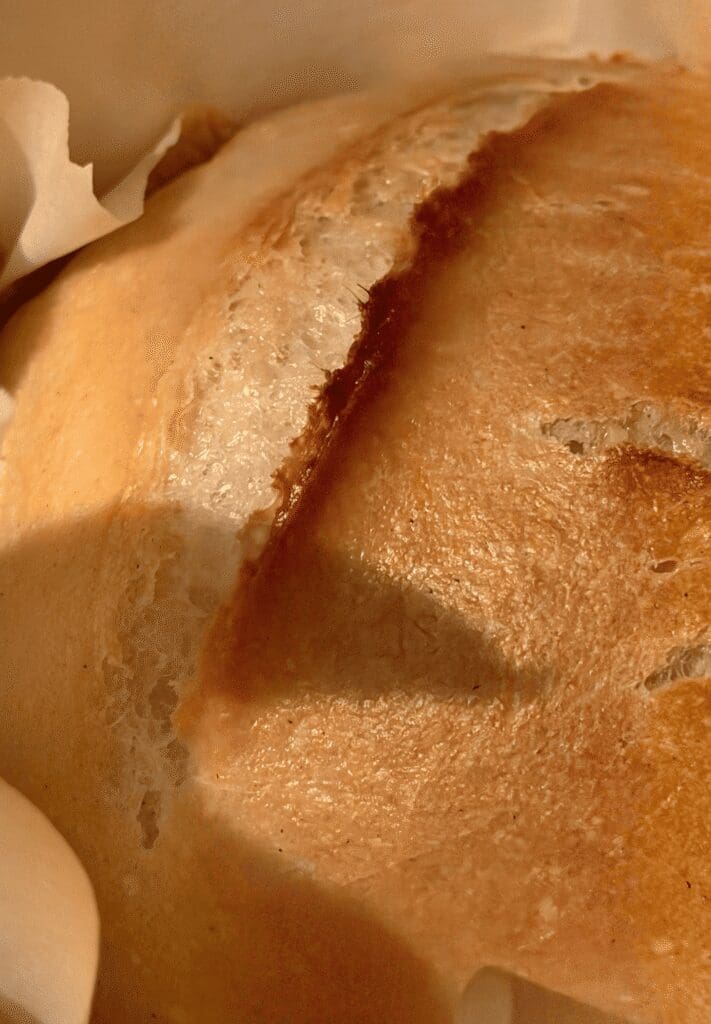
People do not agree whether an ice cube under the parchment when you bake really helps the loaf or not. I used an ice cube for this first loaf, which may have helped it expand, but also may have contributed to how blonde the outer edge was. Gluten free sourdough bread also can be a little lighter in color so more testing is needed to see how much the ice affects the crust color.
I will let you all know with further testing whether this recipe really benefits from the ice or not.
Flavor Development
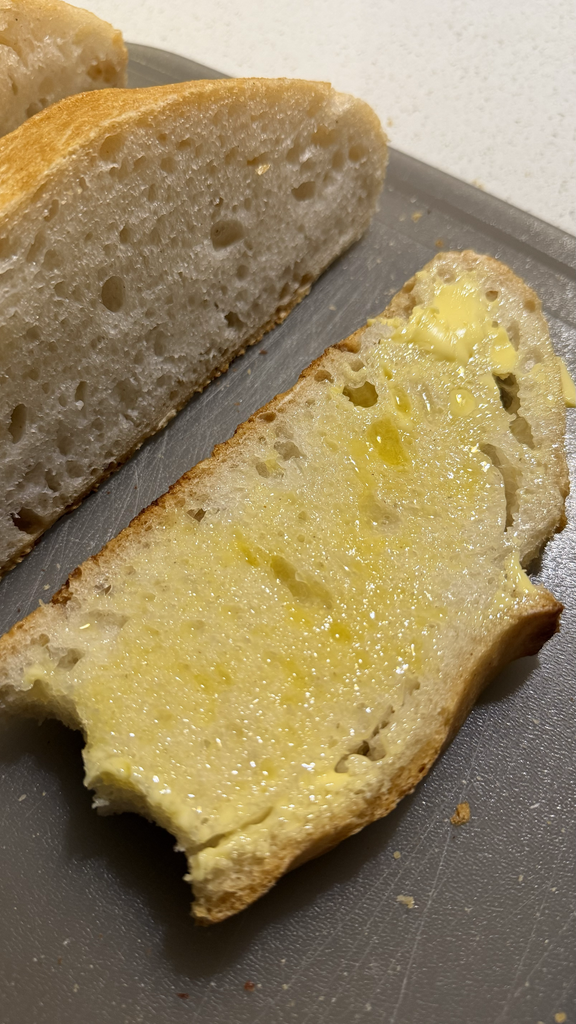
Samantha 1 looks amazing and tastes pretty good, but isn’t as funky as I want sourdough to be.
I did some light research, and I am going to experiment with my feeding schedule now that Samantha OG is established. I also want to try a longer cold proof and final rise on the next loaf to see if that helps develop more flavor and a lighter crumb.
I also wonder how the pea protein in the King Arthur Gluten Free Bread Flour will affect the flavor, which will be part of the next round of testing.
That’s all I’ve got for now, I’m new here too, remember?
Happy risings from me and Samantha!

Be the first to comment